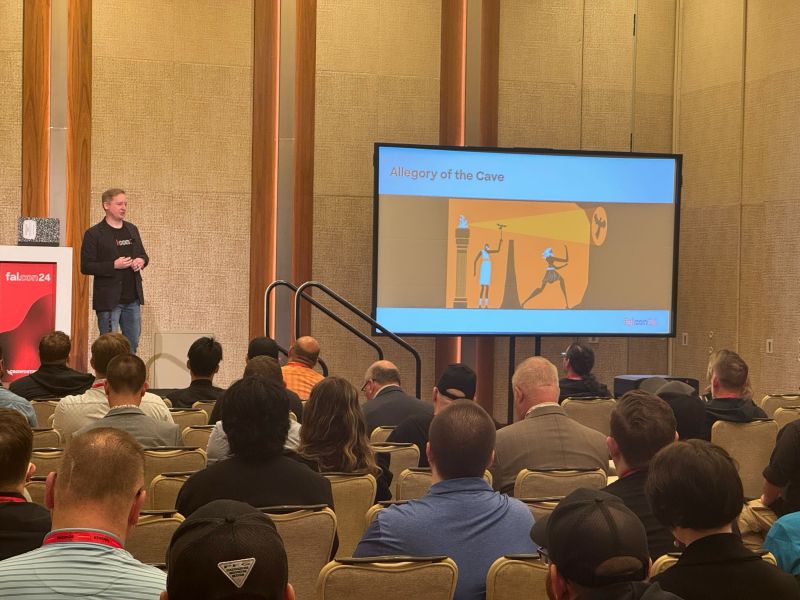
Attending and presenting at Falcon 24 was an incredible experience. The opportunity to share my research on the psychology of cyber defenders with such an engaged and knowledgeable audience was both exciting and rewarding.
As cybersecurity threats evolve, the need to understand the human element of defense has never been greater. My talk focused on the correlation between personality traits, cyber experience, and cyber defenders’ perspectives on cybersecurity program failure—a critical area that can inform how organizations structure their security teams, training programs, and policies.
Key Insights from My Research
During my presentation, I shared mid-study preliminary findings from my ongoing research, which explores:
- How personality traits shape cybersecurity effectiveness – Are certain traits (such as conscientiousness or neuroticism) linked to better or worse security behaviors?
- The role of cyber experience in security decision-making – Does more experience translate to better security habits, or can overconfidence lead to risk-taking?
- Why cyber defenders perceive security programs as failing – Common frustrations, organizational challenges, and psychological factors that impact security culture.
One of the most engaging parts of the session was the discussion with attendees, who brought their own perspectives and experiences into the conversation. It was fascinating to hear how different organizations struggle with similar challenges—whether it’s getting employees to adhere to security policies, mitigating burnout in security teams, or understanding the cognitive biases that lead to poor security decisions.
The Importance of CyberPsychology in Cyber Defense
Cybersecurity is often viewed through a technical lens, but the psychological and behavioral aspects are just as important. Understanding what motivates cyber defenders, how they react to security challenges, and what makes security programs succeed or fail is essential for building stronger defense strategies.
Falcon 24 reinforced the growing recognition of CyberPsychology as a crucial component of cybersecurity research and practice. As organizations look for ways to enhance security culture, reduce human error, and improve training, integrating psychological insights will be key.
Looking Ahead to CYPSY27
With Falcon 24 behind me, I’m now preparing to meet academic peers at CYPSY27, where I’ll be learning about the latest advancements in CyberPsychology and sharing more about my own research. Events like these are vital for fostering collaboration between researchers and industry professionals, ensuring that psychological insights can be applied to real-world cybersecurity challenges.
Join My Research
My study is still ongoing, and I’m looking for more cybersecurity professionals to participate! If you’re a cyber defender and would like to contribute to research that can help improve security culture and defender well-being, you can participate here: My Research Study
A huge thank you to everyone at Falcon 24 for the engaging discussions and support. Looking forward to continuing this important conversation at CYPSY27 and beyond!
#CyberPsychology #Cybersecurity #Falcon24 #CYPSY27 #HumanFactors #CyberDefenders